
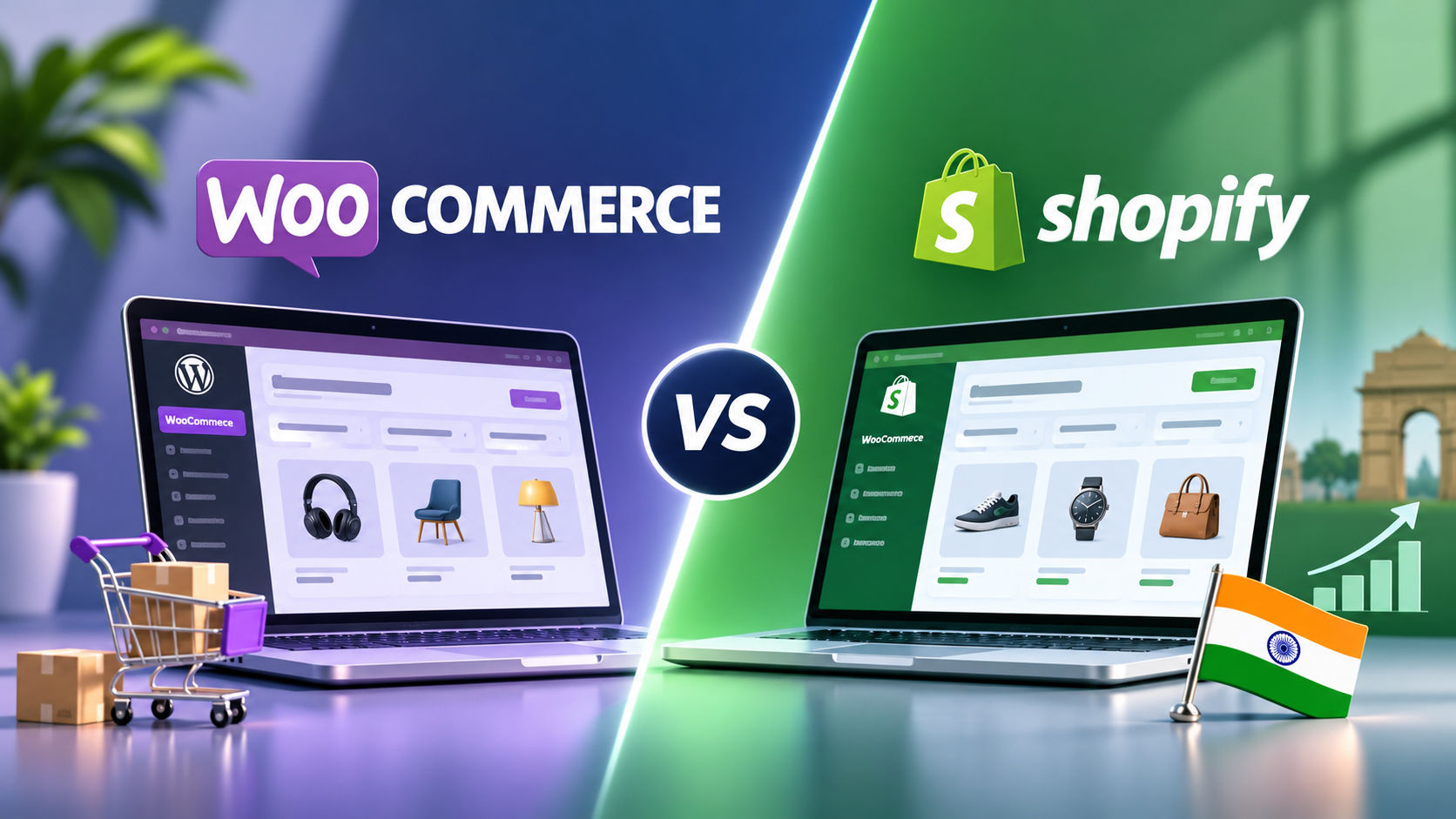
The global e-commerce landscape is shifting rapidly. If you are launching a new online business or scaling an existing retail brand in 2027, one critical question stands between you and your launch day: WooCommerce vs Shopify—which platform is right for your business?
Choosing the right foundation impacts everything from your user experience to your monthly overheads. In competitive global markets like the USA, India, and the UAE, consumer behaviors vary significantly. A flawless website design combined with the right platform architecture is essential to capture market share.
Let’s break down the core differences, regional alignment, and key trade-offs to help you make an informed choice for your brand.
WooCommerce vs Shopify: The Core Differences
Before diving into regional trends, it is crucial to understand the fundamental difference in how these two giants operate:
- Shopify: This is a fully managed, all-in-one software-as-a-service (SaaS) platform. Hosting, SSL security, and core technical updates are handled entirely by Shopify. It is designed for merchants who want a fast, hands-off setup without dealing with complex backend code.
- WooCommerce: This is an open-source, flexible plugin built on top of WordPress. It grants you 100% data ownership and unmatched creative freedom. For businesses requiring custom website design structures and complex functionalities, WooCommerce remains the gold standard.
🌍 Global Market Suitability in 2027
Different regions demand different operational setups. Here is how these platforms stack up across your target markets in 2027:
1. USA, UK, Canada & Europe In highly mature markets, site speed, frictionless checkouts, and multi-channel selling are top priorities.
- Shopify: Highly dominant among direct-to-consumer (D2C) brands and dropshippers due to its robust global infrastructure and fast loading speeds out of the box.
- WooCommerce: Strongly preferred by established brands that want to bypass recurring subscription fees and leverage advanced content-driven SEO strategies to lower their customer acquisition costs.
2. India India’s digital market thrives on cost-efficiency and deep local feature integrations.
- WooCommerce: Leads the chart for custom ecommerce website development in India. It allows businesses to seamlessly integrate localized payment methods like UPI, Razorpay, and Paytm without paying extra transaction penalties. Affordable local hosting also keeps operational costs incredibly low.
- Shopify: A solid choice for enterprise-level or luxury brands, though its recurring subscription fees and transaction percentages can eat into the margins of high-volume, low-margin retail startups.
3. UAE & Kuwait (Middle East) The Middle Eastern e-commerce sector is experiencing massive digital growth.
- Shopify: Has gained ground due to better recent integrations with regional payment gateways like Tap and PayTabs.
- WooCommerce: Remains highly favored for its superior native handling of Right-to-Left (RTL) Arabic typography and localized UI/UX layouts, providing a highly tailored shopping experience.
4. Japan Japan is a distinct market built heavily on consumer trust, unique design aesthetics, and specific local operations.
- Shopify: Has adapted well by supporting local Konbini (convenience store) payments. However, traditional Japanese enterprises frequently lean toward bespoke, custom-coded WooCommerce ecosystems to maintain strict alignment with domestic corporate standards.
Key Comparison Matrix (2027 Edition)
| Feature | Shopify | WooCommerce |
|---|---|---|
| Ease of Use | High (Intuitive, drag-and-drop dashboard) | Moderate (Requires developer guidance or tech familiarity) |
| Hosting & Security | Included natively in the monthly plan | Self-hosted (Managed by the merchant or agency) |
| Customization | Limited to template bounds and API apps | Unlimited (Total control over source code) |
| Transaction Fees | Up to 2% if not using Shopify Payments | Zero additional transaction fees |
| SEO Flexibility | Solid, but locked structural URLs | Excellent (Deep technical and meta control) |
The Verdict: Which Platform is Right for Your Business?
Your final selection should align with your in-house capabilities, long-term scaling strategy, and financial blueprint.
Choose Shopify if:
- You want a fast time-to-market with zero server-side maintenance.
- You prefer predictable, flat-rate monthly software overheads.
- You want security patches and payment card compliance handled automatically.
Choose WooCommerce if:
- You demand absolute ownership over your business data and source code.
- You want to scale without platform-side percentage cuts or ascending software tiers.
- You require a completely unique, highly functional custom ecommerce website development solution.
🚀 Build a Future-Proof Online Store Today
Selecting the right platform is only half the battle. A successful e-commerce business requires clean code, lightning-fast performance, and a high-converting, user-friendly website design .
Whether you are launching your store in India, the UAE, the USA, or anywhere across the globe, Webgram IT Solution is here to turn your vision into a high-yielding reality. Our dedicated engineering team specializes in crafting tailored, secure, and highly scalable ecommerce website development solutions designed to maximize your ROI.
Contact Webgram IT Solution today - to schedule a consultation and bring your digital storefront to life!